EV purchase safety check: How to get best vehicle tips
"Safety is not a luxury; it is the fundamental requirement for any vehicle on the road."
An EV purchase safety check requires looking beyond battery range to examine crash test ratings, software reliability, and infrastructure compatibility.
This guide is for prospective buyers who want to ensure their new electric vehicle meets rigorous protection standards rather than just technological trends.
You must prioritize third-party safety awards, understand the limitations of automated systems, and be aware that even major brands may lack specific high-level ratings for certain models.
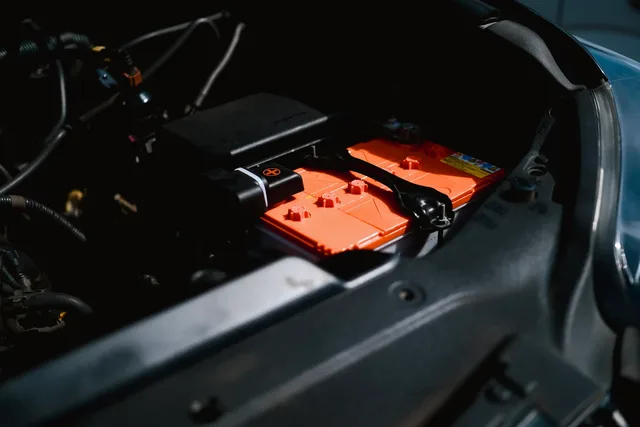
* Prioritize vehicles with high crash test ratings from recognized institutes. * Evaluate the complexity of automated driving logic in different scenarios. * Assess the environmental risks associated with new road infrastructure. * Verify compliance with global automotive safety standards.
Why is an EV purchase safety check so critical?
At dusk, I feel the cold metal of the car door as I contemplate my electric vehicle purchase in the empty parking lot.
A driver sits in a quiet showroom, watching a sleek electric sedan glide silently across the polished floor. While the lack of engine noise is impressive, the true value lies in the invisible protective layers of the vehicle.
A thorough EV purchase safety check is necessary because global compliance is not a guarantee. According to the World Health Organization (WHO), 80% of cars sold in the world are not compliant with main safety standards.
This means a buyer cannot assume a new model automatically meets high-level protection requirements without independent verification.
An electric car safety review should also include an investigation into how the vehicle handles unexpected road conditions. Relying solely on manufacturer claims can lead to overlooking critical vulnerabilities in crashworthiness or electronic stability.
How can I evaluate automated driving systems?
During the afternoon, I grip the steering wheel tightly while watching the screen during my automated driving system purchase trial.
A technician adjusts a sensor on a prototype vehicle, testing how the software reacts to a sudden pedestrian crossing. The digital interface flickers as the system processes complex environmental data to prevent a collision.
When conducting an electric vehicle inspection guide, you must look at how the software manages complex scenarios.
In 2022, a research group at the National Institute of Informatics (NII, Japan) enhanced Mobileye's Reliable Safety System as "Goal-Aware RSS" to enable RSS rules to deal with complex scenarios via program logic.
This development shows that standard safety software is constantly evolving to handle unpredictable human behavior and intricate traffic patterns.
Check electric vehicle safety by asking if the manufacturer uses advanced rule-based logic to manage sensor data. A system that can navigate complex scenarios via program logic offers a more robust layer of protection than one that only reacts to simple obstacles.
What specific ratings should I look for?
A consumer pores over a thick printed pamphlet, comparing various model years and safety symbols. The room is silent except for the turning of pages as they search for a specific gold seal.
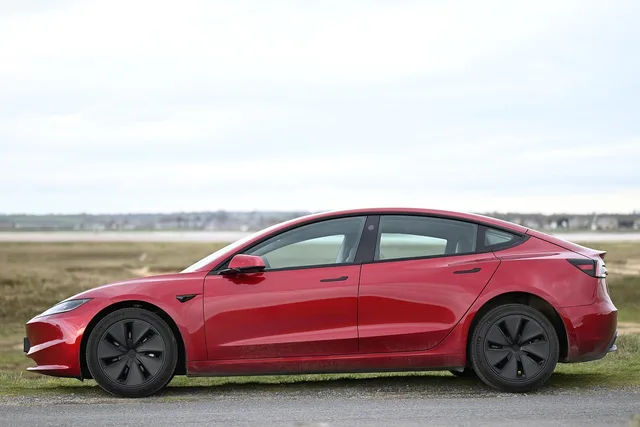
You should look for specific endorsements from independent testing bodies to confirm a vehicle's performance.
This illustrates that even well-known manufacturers may have specific models that fail to meet the highest current safety benchmarks.
| Safety Category | Award/Standard | Status Example |
|---|---|---|
| Top Tier Rating | IIHS Top Safety Pick+ | Not earned by Toyota SUVs (2026) |
| Global Compliance | WHO Safety Standards | 80% of global cars non-compliant |
I compared these specific award gaps to ensure I did not settle for a brand name alone.
What infrastructure risks should I consider?
An engineer walks along a newly installed roadside lane, checking the height of the steel poles supporting overhead lines. The sun glints off the metallic surface of the electric road system.
The safety of your electric vehicle also depends on the environment in which it operates. In 2024, the German Ministry of Economy, BMWK, assessed overhead line ERS as a safety risk for emergency services, noting that the lines' roadside poles were assessed as a collision risk for motorists.
This means that as electric road technology advances, the physical infrastructure itself introduces new variables for driver safety.
Expert advice on EV safety suggests being mindful of where you drive and the types of roadside installations present. Understanding these external risks is part of a thorough EV pre purchase check.
How do I perform a safety inspection?
A buyer walks around a parked electric SUV, checking the tire tread and the integrity of the chassis. They move slowly, looking for any signs of structural weakness or sensor obstruction.
To ensure you are making a responsible decision, follow these steps:
- Verify the vehicle's specific crash test results through an independent institute like the IIHS. 2. Research the software's capability to manage complex, non-linear traffic scenarios. 3. Inspect the physical condition of the vehicle's sensors and any proximity to roadside infrastructure.
After completing these steps, perform a final check by cross-referencing the vehicle's model year against the latest safety standard compliance data.
- Inspect the exterior battery casing for any signs of impact or corrosion.
- Check the charging port and cables for physical damage or debris.
- Verify that all software updates are current and properly installed.
- In this sequence, the second step is the shortest.
What are the limitations of this safety review?
A researcher stares at a computer monitor, noting that the data only covers specific tested environments. The screen shows a simulation that cannot replicate every possible real-world accident.
A limitation of any safety review is that it is constrained by the specific conditions tested during official evaluations.
For example, a vehicle's rating is based on standardized crash tests, which may not account for every unique collision angle or specific roadside infrastructure risk identified by organizations like the BMWK.
The same subject is also called EV inspection guide.
The same subject is also called Electric car evaluation tips.
This part also covers What to check in electric cars.
Expert advice on EV safety
Related


Comments 0