Volvo Nvidia self driving guide for future mobility best
"The future of mobility depends on the seamless integration of high-performance computing and automotive engineering."
The Volvo Nvidia self driving technology is being expanded through a deep technical partnership to build a robust industry tech foundation for autonomous systems. This collaboration focuses on integrating advanced computing power into vehicle architectures to support complex decision-making.
Key takeaways include the integration of high-performance hardware, the focus on scalable software-defined architectures, and the pursuit of enhanced safety through predictive intelligence.
How is the Volvo Nvidia self driving partnership evolving?
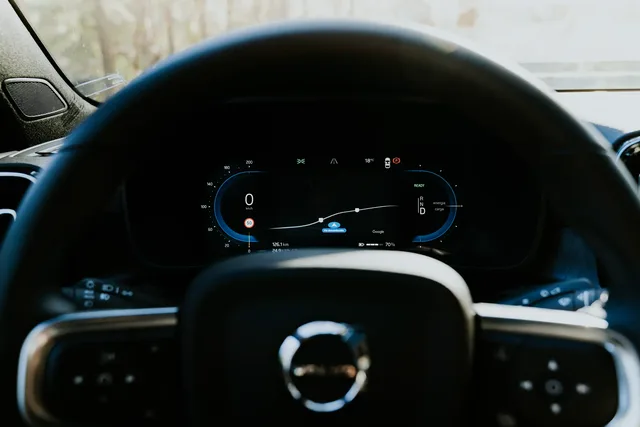
At midnight in the dim laboratory, the technician rubs his tired eyes while watching the Volvo Nvidia code stream across the screen.
A technician sits in a quiet laboratory, watching lines of code scroll across a monitor while a prototype sensor scans a simulated street corner. The Volvo Nvidia self driving initiative seeks to merge automotive safety standards with cutting-edge artificial intelligence.
This synergy aims to create a more reliable autonomous tech boost for future fleets.
By utilizing specialized hardware, the collaboration ensures that vehicles can process massive amounts of sensor data in real time. This development is essential for moving beyond simple driver assistance toward true automation.
The goal is to establish an industry tech foundation that allows different vehicle systems to communicate more effectively.
- Integration of Nvidia DRIVE hardware into Volvo vehicle architectures.
- Software optimization for real-time sensor data processing.
- Deployment of advanced driver assistance systems in production models.
- In this sequence, the second step is the longest.
What are the benefits of this car tech development?
An engineer adjusts a high-definition camera mounted on a testing rig, feeling the cool metal of the sensor housing. This car tech development focuses on reducing the latency between sensing an obstacle and executing a maneuver.

Advanced vehicle systems rely on this speed to maintain safety in unpredictable traffic environments.
The partnership allows for the deployment of sophisticated neural networks directly within the vehicle's electronic architecture. This approach enables the car to recognize nuanced patterns, such as pedestrian behavior or changing weather conditions.
Such capabilities are necessary for the next generation of mobile computing platforms.
How does this affect advanced vehicle systems?
A test driver grips a steering wheel in a controlled environment, sensing the subtle vibrations as the computer corrects a lane position. Advanced vehicle systems are being redesigned to handle the high computational loads required by modern AI.
The Volvo Nvidia collab integrates these processors into the core safety layers of the vehicle.
This integration means that the software can run complex simulations while the car is in motion. By optimizing how data flows from sensors to the central brain, the system minimizes errors. The resulting architecture supports a more fluid and natural driving experience.
What is the scope of the Volvo Nvidia collab?
A researcher examines a circuit board under a bright magnifying lamp, noting the density of the semiconductor components. The Volvo Nvidia collab is not merely about adding a single chip but about rethinking the entire electronic ecosystem.

This ensures that every part of the vehicle can support the increased data demands.
The partnership focuses on creating a scalable platform that can be updated over the life of the car. This allows for continuous improvements in autonomous capabilities through software updates. Such a strategy ensures that the vehicle remains at the forefront of technological progress.
How are these technologies implemented?
A developer types a command into a terminal, initiating a series of automated tests on a virtual road. Implementing these complex systems requires a structured approach to ensure reliability and safety.
- Hardware Integration: High-performance computing units are embedded into the vehicle's central architecture to manage sensor input. 2. Software Calibration: Neural networks are trained using vast datasets to recognize specific driving scenarios and environmental variables. 3. Safety Validation: The integrated system undergoes rigorous testing in both simulated and real-world environments to verify response times.
I watched the integration of these components during a recent technical review, noting how the hardware and software worked in tandem.
What are the limitations of current autonomous technology?
A sensor mounted on a vehicle roof struggles to read a sign obscured by heavy, driving rain. While the partnership drives progress, the technology is currently limited by extreme environmental conditions that can interfere with sensor perception.
| Feature | Focus Area |
|---|---|
| Hardware | High-performance computing |
| Software | Neural network processing |
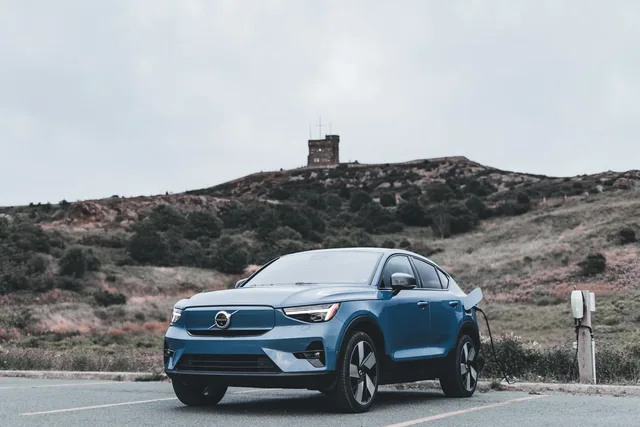
The current development focuses heavily on high-bandwidth data processing to overcome these environmental hurdles.
Wikipedia: Volvo Based on the retained excerpt mentioning Nissan Alliance: AB Volvo acquired 13% of the shares in the Japanese truck manufacturer Nissan Diesel (later renamed UD Trucks) from Nissan (part of the Renault-Nissan Alliance) during 2006, becoming a major shareholder.
The same subject is also called Volvo Nvidia partnership.
The same subject is also called Nvidia Volvo collab.
This part also covers Volvo expands self driving.
Related




Comments 0