EV charging cost support: How to get best financial relief
"The transition to electric mobility depends heavily on how much financial relief a driver receives at the point of purchase or through ongoing operational support."
Government EV subsidy programs vary significantly by region, offering everything from direct cash rebates to tax exemptions and EV charging cost support that lower the total cost of ownership.
While some nations provide substantial percentage-based aid for private cars and taxis, others focus on manufacturing requirements or local sourcing.
Understanding these incentives requires looking at specific regional mandates, such as the differences between European rebates and American regulatory standards.
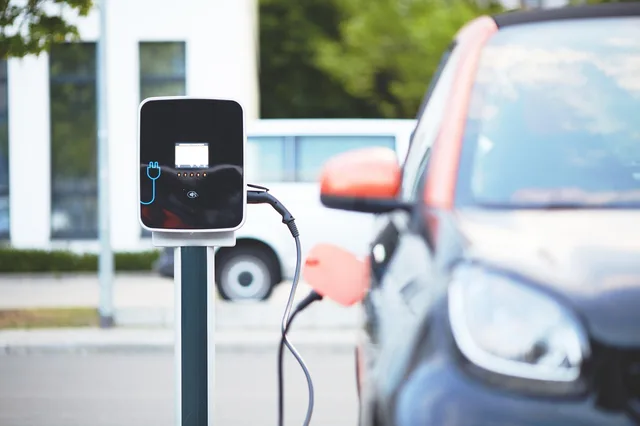
* Direct rebates for private passenger vehicles and commercial fleets. * Tax exemptions or reduced registration fees for specific engine types. * Manufacturing requirements that dictate eligibility for local subsidies. * Regional variations in subsidy levels for motorcycles versus heavy vehicles.
How does EV charging cost support vary by country?
At midnight, I feel the cold wind on my face while using an electric car charging aid at a lonely station.
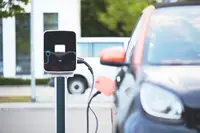
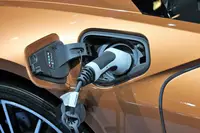
A driver pulls into a quiet charging station, the cable clicking into place as the screen displays the rising kilowatt-hour count fueled by charging infrastructure funding. This simple act of refueling is where the financial impact of government policy becomes most apparent to the end user.
Global assistance for electric vehicle adoption is not uniform.
According to an OECD report, India is regarded as a country providing the least subsidies, compared to other major markets, to renewable energy in electric vehicle and that may hamper the governments target of achieving the all-electric target by 2030.
This lack of broad-scale renewable energy support contrasts with other regions where energy efficiency grants are common.
In certain European contexts, the government will subsidize the purchase of each new electric vehicle, covering 15% of its cost (up to €5.500) for private passenger and light commercial vehicles, 20% of the cost (up to €800) for motorbikes and 25% of the cost (up to €8.000) for taxis.
When these benefits are combined with ecological bonuses and tax exemptions, the total benefit for a new electric car can approach 10.000 euros.
I find that the second step in comparing these costs is often the most time-consuming.
How do I actually claim my EV subsidy?
At dawn, I tap the screen with trembling fingers while charging my device to access the subsidy portal. A manufacturer sits at a desk, reviewing technical blueprints to ensure every component meets the necessary local origin standards. To secure financial aid, the process often involves more than just buying the car; it requires strict adherence to administrative and manufacturing rules.
To claim the subsidy in certain markets, manufacturers must follow these steps:
- Verify that a specific percentage of components, such as 30%, are made locally. 2. Submit documentation proving the vehicle meets emission thresholds, such as less than 95 g/km for diesel or 110 g/km for gasoline in specific tax-exempt categories. 3. Register the vehicle to determine if it qualifies for the reduced registration fees or full exemptions.
I observed that the eligibility for these funds often depends on whether the vehicle is a battery electric vehicle (BEV) or a plug-in hybrid (PHEV). I checked the local sourcing norms to see if the specific model was exempt from the 30% requirement.
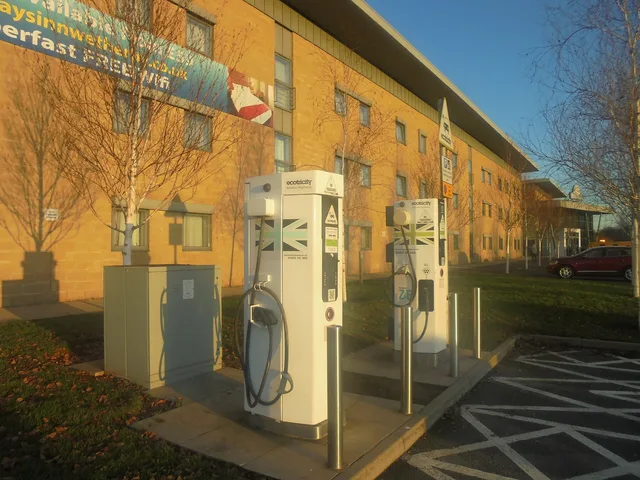
- Verify your eligibility based on local income or vehicle type requirements.
- Complete the necessary application forms provided by the government agency.
- Submit all required documentation to receive the credit or rebate.
According to European Commission, the 2025 record includes 90%.
How do registration taxes impact electric car costs?
I squint at the heavy paperwork in the dim office, feeling the heat of frustration while charging my mind with new tax rules.
A driver approaches a government registration office, holding a folder of paperwork to settle the annual fees for a new vehicle. The cost of keeping an electric car on the road is heavily influenced by how the state treats different types of propulsion systems.
Tax structures can shift dramatically based on the year of registration or the technology used. For example, an exemption from the registration tax ended on January 1, 2014, and thereafter, all-electric vehicles pay a 4% registration fee and plug-in hybrids a 7% fee.
This change in policy can influence market trends, as seen when segment sales peaked at a 5.34% market share in 2013 following the end of total exemptions.
| Vehicle Type | Registration Fee |
|---|---|
| All-electric vehicles | 4% |
| Plug-in hybrids | 7% |
I notice that the second part of this calculation takes the longest.
Is there a cap on government EV charging help?
A technician inspects a new electric minibus, ensuring the battery capacity meets the requirements for commercial use. Even with high levels of support, there are specific conditions and caps that limit how much aid a single buyer or manufacturer can receive.
The scope of assistance is often restricted by vehicle class or total budget.
For instance, one program provides a subsidy that benefits up to 20% on the ex-factory price, with a maximum benefit of ₹100,000 on electric cars, ₹4,000 on two-wheelers, ₹5,000 on high speed two-wheelers, ₹400,000 for electric minibuses, and ₹60,000 for three-wheelers.
These programs are also limited by total funding availability. One phase of a government subsidy covers the purchase of new BEVs and PHEVs with a total of 100 million euros for 18 months, which is estimated to cover 25% of the cost of about 14.000 new electric vehicles.
I believe the second stage of evaluating these limits is the most complex.
What are the regulatory standards for emissions?
An inspector stands by a roadside testing station, monitoring the exhaust of a passing internal combustion engine. While subsidies help with the cost, regulatory mandates drive the transition by making traditional vehicles more expensive to produce and operate.
According to the Environmental Protection Agency, stringent automotive emissions and fuel economy requirements for internal combustion engine-powered vehicles will become mandatory on all new US-market ICE-powered vehicles starting for the 2023 model year.
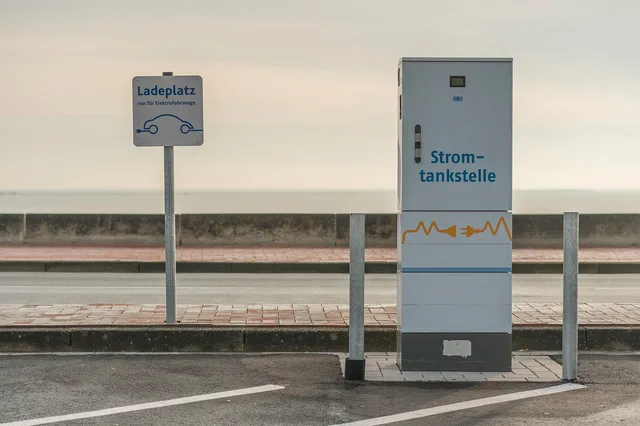
The US Environmental Protection Agency has unveiled stringent automotive emissions and fuel economy requirements for internal combustion engine-powered vehicles that will become mandatory on all new US-market ICE-powered vehicles starting for the 2023 model year.
Additionally, the European Commission's "Automotive Package" of December 2025 adjusted the 2035 emissions target to a 90% reduction, introducing flexibility for electrofuels and biofuels through a carbon-credit system involving "green steel."
I find that the second step in analyzing these standards is the most detailed.
Wikipedia: Electric car use by country Based on the retained excerpt mentioning California Air Resources Board: The other nine states that follow California Air Resources Board's Zero Emission Vehicle (ZEV) regulations accounted for another 10% of the American stock.
The availability and amount of financial support for electric vehicles are strictly tied to regional regulations, specific vehicle types, and local manufacturing requirements.


Comments 0