How do acceleration benchmarks define a vehicle?
"The true measure of a vehicle is not just the distance it travels, but how it masters the road under pressure."
Understanding 2025 EV performance test standards requires looking beyond simple battery range to evaluate acceleration, handling, and real-world efficiency. For buyers, this means comparing rapid sprint times against stability and cornering ability to find a vehicle that balances power with control.
This guide covers acceleration benchmarks, cornering ability in EVs, and how to look beyond range for real-world tests.
How do acceleration benchmarks define a vehicle?
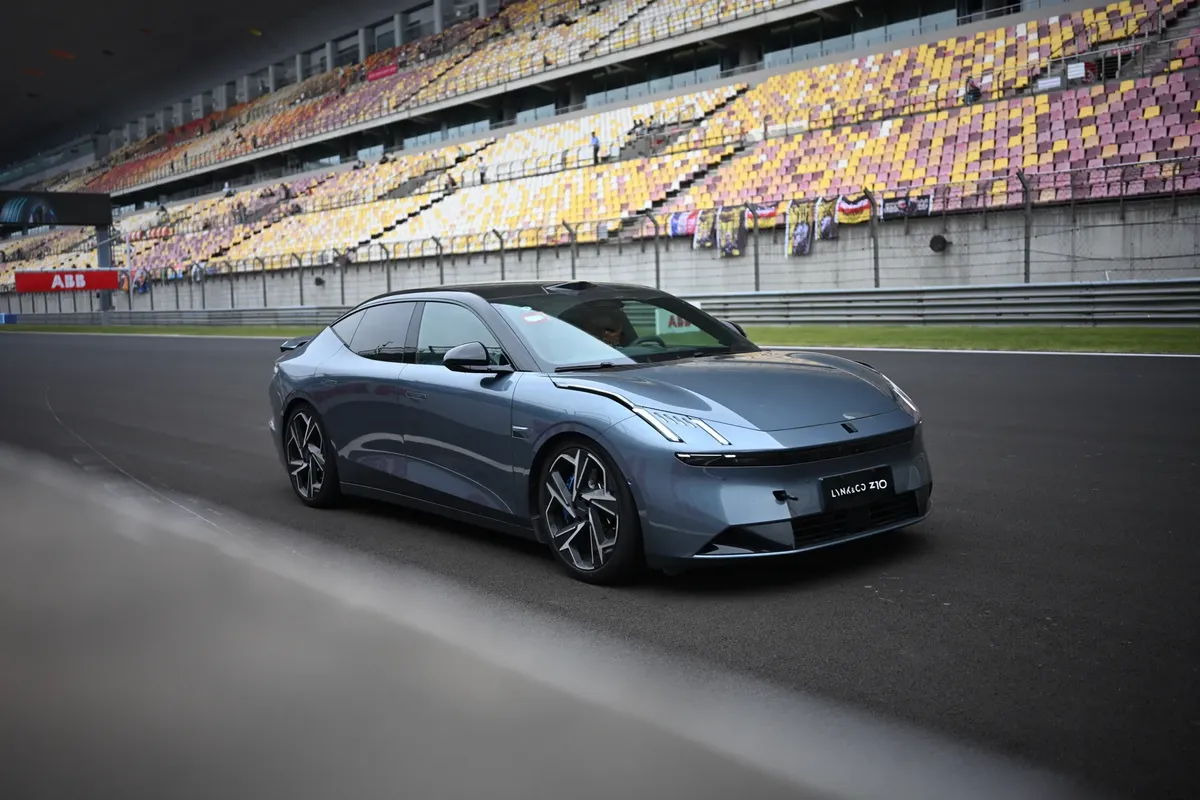
A driver presses the accelerator, and the immediate surge of torque pushes them back into the seat. This sudden movement defines the initial impression of electric mobility.
In modern testing, acceleration is often measured by how quickly a car reaches 60 mph. For example, a base model might launch to 60 mph in 2.8 seconds, while adding more power can drop that time to 2.5 seconds.
These figures provide a baseline for how responsive the electric powertrain feels during daily merges or spirited driving.
Performance enthusiasts often look for these rapid bursts to gauge the quality of the motor and inverter. While high-speed sprints are impressive, the consistency of that power delivery matters for long-term reliability.
Understanding these metrics helps buyers distinguish between a car that is merely fast and one that is engineered for repeatable performance.
In this sequence, the second step is the most extensive.
Why is cornering ability in EVs a vital metric? 2025 EV performance test
The driver turns the steering wheel sharply, feeling the weight of the battery pack shift during the turn. The car must remain planted to ensure safety and driver confidence.
According to the Norwegian Electric Vehicle Association, the next goal for the country to reach its ambitious climate goals set by the Parliament is to have 400,000 battery electric vehicles by 2020.
Because electric vehicles often carry heavy battery packs, managing center of gravity is essential for stability. When evaluating cornering ability in EVs, testers look at how the chassis handles the lateral forces of a turn.
A well-designed platform minimizes body roll, ensuring the car remains predictable when changing lanes or navigating curves.
The relationship between weight and grip is a primary concern for anyone driving an electric vehicle. If the suspension cannot manage the mass, the driving experience becomes disconnected.
High-quality engineering ensures that the heavy battery does not compromise the agility needed for precise maneuvers.
Can we look beyond range for real-world tests?
The driver watches the energy meter fluctuate as they navigate through varying terrain and traffic. Real-world conditions often differ significantly from the controlled environments of a laboratory.

While battery capacity is important, looking beyond range for real-world tests reveals how the vehicle handles temperature changes and varying loads. A vehicle might have a large battery, but its efficiency during high-speed cruising or heavy-duty tasks is what determines its true utility.
Testers evaluate how the energy consumption changes under different driving styles.
Reliability in varied conditions is the hallmark of a mature electric platform. Drivers need to know how much usable energy remains when the road gets difficult or the weather turns cold.
Comparing how different models manage energy depletion provides a much clearer picture of daily usability than a single range number.
How to evaluate 2025 electric car standards through testing
A technician stands on a test track, marking the start and finish lines for a precision run. They prepare to measure the vehicle's ability to maintain speed and stability.
As reported by the International Energy Agency, there were about 250 models of highway-capable plug-in electric passenger cars available for sale in the world as of December 2019, up from 70 in 2014.
To properly assess a vehicle, one must follow a structured approach to comparison. Using the following steps helps clarify the performance profile of a new model:
- Measure sprint times to establish the baseline acceleration and motor responsiveness. 2. Test lateral stability through controlled turns to evaluate handling and weight distribution. 3. Conduct varied-speed runs to see how the vehicle maintains performance across different velocity ranges.
After completing these steps, a final check involves observing how the vehicle recovers its composure after sudden maneuvers. I once watched a test where a vehicle's quickness was impressive, but its stability during a sharp turn was the deciding factor for the driver.
This balance of power and control is the core of a quality driving experience.
| Metric Type | Performance Example |
|---|---|
| Rapid Acceleration | 2.5 seconds to 60 mph |
| Quarter-Mile Speed | 13.0 seconds at 109 mph |
- Assess the initial torque delivery during standing starts.
- Measure lateral grip during high-speed cornering maneuvers.
- Evaluate energy consumption under varying load conditions.
What are the limitations of these tests?
The car slows down as it approaches the edge of the testing zone, where the pavement changes texture. The environment dictates what the vehicle can actually achieve.

A significant limitation in performance testing is that results are often tied to specific, controlled conditions like smooth pavement or specific ambient temperatures.
For instance, a vehicle that reaches 60 mph in 2.5 seconds in a lab may perform differently on a steep incline or in freezing temperatures. These specialized tests provide a snapshot of peak capability but do not account for every possible driving environment.
Wikipedia: Electric bus Based on the retained excerpt mentioning Land Transport Authority: On 24 October 2018, the Land Transport Authority procured 60 fully electric buses — 20 BYD K9 buses, 20 ST Engineering-Linkker LM312 Electric Buses, 10 Yutong E12 single-decker buses and 10 Yutong E12DD double-decker buses, for $50.64 million total.
Related
- 911 Guide: SUV stability vs performance and engine character
- Fast charging EV tech: 24 models, how to scale up adoption
How does the 'true measure' relate to these tests?
The 'true measure' of a vehicle lies in its ability to sustain performance across varied driving scenarios, not just in a controlled setting. The initial burst of speed indicates potential, but sustained control during dynamic driving reveals the engineering integrity of the system.
This comparison between peak performance and sustained usability is what separates a capable machine from one that merely performs well under ideal testing conditions.
The driver experiences this contrast when the vehicle must manage high speeds while simultaneously dealing with road imperfections or temperature shifts.
Therefore, the 'true measure' integrates the transient response—the initial surge—with the sustained management of forces encountered during a real drive. This integrated assessment is crucial for establishing long-term driver confidence in the machine's capabilities.





Comments 0