EV segment choice guide: 60 buses procured for transit needs
"The transition to electric mobility is no longer a future projection but a present reality seen in changing market shares and massive fleet procurements."
Choosing the right vehicle requires understanding how different segments meet specific needs, from private passenger cars to large-scale transit. This guide explores how to navigate the expanding variety of electric models and how different vehicle types fit into modern infrastructure.
You will learn about market trends, the diversity of available models, and the practicalities of large-scale fleet management.
How do we understand the EV segment choice guide?
In the quiet showroom, a customer runs a hand over the cold metal of a sedan while studying the EV segment choice guide.

A driver walks into a showroom, looking at a sleek sedan compared to a larger SUV. Identifying the right fit begins with recognizing that the electric vehicle market has expanded rapidly from niche offerings to a global variety of options.
The availability of choices has grown significantly over the last decade.
As of December 2019, the International Energy Agency reported that there were about 250 models of highway-capable plug-in electric passenger cars available for sale globally, a substantial increase from the 70 models available in 2014.
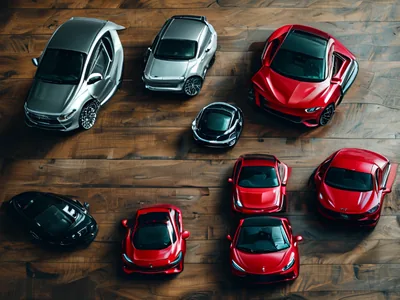
This growth means buyers can now select from a much wider range of sizes, ranges, and purposes.
This expansion allows for a more tailored EV segment choice guide when evaluating personal transport needs. With hundreds of models on the market, picking a vehicle involves balancing battery range against physical dimensions and intended use.
What defines an effective Electric car choice strategy?
In the dim light of the office, a planner traces a map while considering how each transit segment serves the city.
A city planner stares at a digital map, tracing the routes of various bus lines and transit hubs. Developing an effective Electric car choice strategy often involves looking at how different vehicle sizes serve different public and private sectors.
Large-scale transit requires different procurement strategies than personal car ownership.
For example, on 24 October 2018, the Land Transport Authority procured 60 fully electric buses, which included 20 BYD K9 buses, 20 ST Engineering-Linkker LM312 Electric Buses, 10 Yutong E12 single-decker buses, and 10 Yutong E12DD double-decker buses, for a total of $50.64 million.
Later, on 25 November 2023, the Land Transport Authority procured 360 electric buses, consisting of 240 BYD BC12A04 and 120 Zhongtong N12 buses, for $166.4 million.
These large-scale acquisitions show that segmenting by vehicle type—such as single-decker versus double-decker—is essential for meeting specific transit demands. Such variety ensures that whether the need is for a small commuter car or a high-capacity bus, the technology can be scaled accordingly.
How can we use EV model selection tips for personal use?
A person sits in a driveway, plugging a charging cable into a compact car. Using EV model selection tips helps individuals navigate the transition from internal combustion engines to electric drivetrains.
When selecting a model, one must consider the specific goals of the region or the manufacturer.
According to the Norwegian Electric Vehicle Association, if the country wants to reach the ambitious climate goals set by the Parliament, the next goal is to have 400,000 battery electric vehicles by 2020.
This type of goal-oriented planning often drives the production of specific segments, such as compact cars for urban use or larger vehicles for longer distances.

A successful selection process involves: 1. Assessing daily mileage to determine necessary battery capacity. 2. Evaluating charging infrastructure availability at home or work. 3. Comparing vehicle dimensions against parking and road constraints.
I remember checking the different models available during my first research phase, noting how much the variety had changed in just a few years. This comparison shows that the market is no longer limited to a single type of vehicle.
What are the nuances of an Electric vehicle buying guide?
A shopper compares the price of a traditional car with an electric alternative on a tablet. An Electric vehicle buying guide must account for the total cost of ownership, which includes both purchase price and potential tax incentives.
In some regions, the initial cost is mitigated by government policies.
For instance, in certain markets, all-electric cars and vans are exempt from all non-recurring vehicle fees, including purchase taxes, and a 25% VAT on purchase, making the electric car purchase price competitive with conventional cars.
These financial structures can drastically change which segment is most attractive to a buyer.
An effective Electric vehicle buying guide should look at: 1. The impact of tax exemptions on the total purchase price. 2. The difference between pure battery electric vehicles and plug-in hybrids. 3. Long-term maintenance savings compared to traditional vehicles.
The availability of these incentives can make a premium segment more accessible to the average driver.
How do we compare different vehicle types?
A technician inspects the battery compartment of a heavy-duty bus next to a small passenger car. To make an informed decision, one must compare the technical specifications of different vehicle classes.
| Vehicle Category | Example Models/Types | Procurement/Market Context |
|---|---|---|
| Large Transit | BYD BC12A04 / Zhongtong N12 | 360 buses for $166.4 million |
| Passenger Car | 250 highway-capable models | 250 models available in 2019 |
One must consider that a bus requires much higher capacity and different infrastructure than a passenger car. While the passenger market focuses on ease of use and range, the transit market focuses on passenger volume and durability.
Comparing these segments shows that the technology is versatile enough to handle everything from individual commuting to mass transit. This versatility is a cornerstone of modern electrification.
What are the limitations of current EV technology?
A driver looks at a charging station in a remote area, wondering if the range is sufficient. Understanding the limitations of the technology is as important as understanding its benefits.
A limitation exists in the specific geographic or infrastructure conditions that affect performance.

For example, the goal of reaching 400,000 battery electric vehicles by 2020, as mentioned by the Norwegian Electric Vehicle Association, was a specific target tied to a particular timeframe and set of climate goals.
The transition to electric mobility is shaped by the available models, the scale of procurement, and the specific goals of the regions adopting the technology.
Wikipedia: Plug-in electric vehicles in Norway (full) Based on the retained excerpt mentioning Association (Norsk Elbilforening) Conducted A Survey: In June 2013, the Norwegian Electric Vehicle Association (Norsk Elbilforening) conducted a survey among all-electric car owners, with a total of 1,858 respondents, representing over 15% of all the electric car owners in Norway.
- How do we understand the EV segment choice guide?
- What defines an effective Electric car choice strategy?
- How can we use EV model selection tips for personal use?
Compare EV segments
Related






Comments 0