Autonomous driving impact: Guide how to improve road safety
"The integration of autonomous trucking is projected to generate $9 billion in annual consumer savings by 2035."
Autonomous driving is fundamentally reshaping long-haul logistics by replacing human fatigue with consistent, machine-led precision.
This technology is particularly beneficial for freight companies seeking to lower operating costs and for consumers who may benefit from reduced shipping expenses.

Key takeaways include a projected 45% reduction in industry operating costs, a significant boost in fuel efficiency, and the potential to mitigate crashes caused by driver exhaustion.
How does autonomous driving impact long-haul routes?
At midnight, I watched the autonomous truck glide down the dark highway, feeling the low vibration of the engine in my chest.
A heavy truck glides steadily down a sun-drenched highway, its sensors scanning the asphalt for miles. In 2026, following their 2025 launch, Aurora trucks became capable of driving nonstop from Phoenix to Fort Worth.
This roughly 1,000 mile, 15 hour trip demonstrates how path planning evolution allows for continuous movement without the traditional breaks required by human operators.
The transition from manual to automated systems changes the very nature of distance. While human drivers must stop to rest, these autonomous systems maintain a steady pace across vast stretches of land.
This capability transforms how we view the geography of logistics, turning day-long stretches into seamless, nonstop transit cycles.
How much can AI save in logistics costs?
A manager sits in a quiet office, reviewing a spreadsheet of rising fuel and insurance costs. The integration of autonomous trucking is projected to generate $9 billion in annual consumer savings by 2035. This economic shift is driven by a 45% reduction in total industry operating costs.

The financial improvements are granular and specific. According to technical data, these gains originate from a 32% improvement in fuel efficiency, yielding $5.7 billion in annual fuel savings. Additionally, enhanced safety is expected to result in a $1.4 billion reduction in insurance overhead.
| Category | Projected Benefit/Savings |
|---|---|
| Annual Fuel Savings | $5.7 billion |
| Insurance Overhead Reduction | $1.4 billion |
I observed how these specific efficiency metrics can fundamentally alter a company's bottom line during my review of these projections. The technology is expected to add a net $6 billion to the broader U.S. economy as 170,000 self-driving trucks represent 15% of the total market by 2035.
Can new vehicle tech save lives on the highway?
A driver grips the steering wheel tightly, eyes heavy with the weight of a long night shift. Road safety is a primary driver for this transition, as autonomous trucks target human error, which contributes to roughly 94% of all motor vehicle crashes.
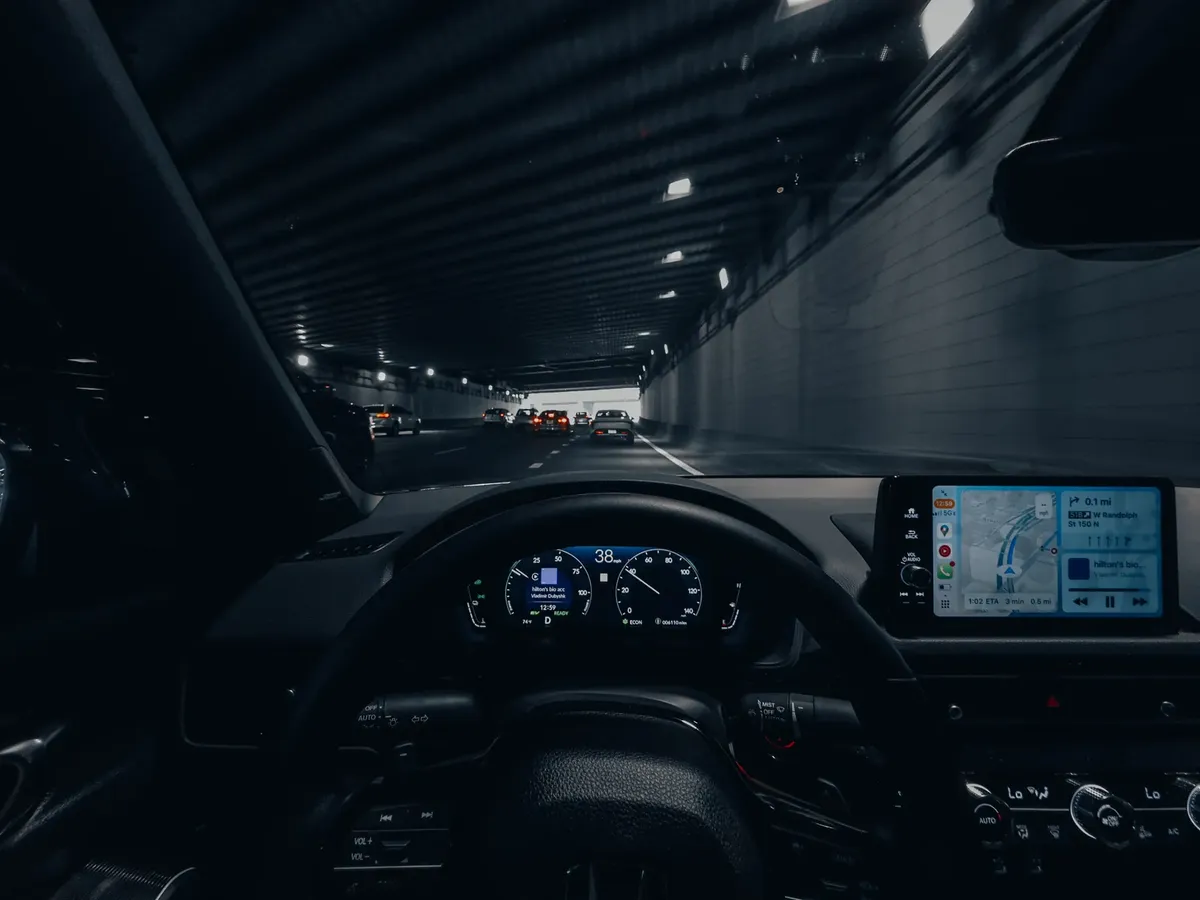
Unlike human drivers, who suffer from exhaustion after several hours, autonomous drivers can operate without cognitive decline.
This stability addresses specific risks. Theoretically, this prevents the estimated 10% of crashes caused specifically by driver incapacitation.
Furthermore, autonomous trucks could eventually avert approximately 600,000 fatalities over a 35-year span if they operate at a safety level just 10% higher than the average human driver.
How does self driving skill change the industry workforce?
A worker walks through a large distribution center, checking the status of incoming freight. The trucking workforce currently accounts for 6% of the total U.S. workforce. As automation scales, the role of the human worker shifts from active driving to oversight and logistics management.
The scale of this change is reflected in the market forecasts. With 170,000 self-driving trucks expected on the road by 2035, the industry is moving toward a hybrid model of human expertise and machine reliability.

This evolution requires a new understanding of how labor and technology coexist on the open road.
What are the steps for implementing automated systems?
An engineer adjusts a sensor on a large vehicle in a brightly lit testing facility. Implementing these systems requires a structured approach to ensure safety and compliance.
- 2. Integrate real-time data collection in AI driving to monitor vehicle performance and environmental variables. 3.
Perform a final check to confirm that all sensor calibrations meet the specific operational requirements for the intended terrain.
- Integrate sensor hardware into existing vehicle fleets.
- Deploy software updates to manage real-time data processing.
- Monitor system performance through continuous feedback loops.
- In this sequence, the second step is the longest.
What are the limitations of these technologies?
A rugged vehicle maneuvers through a thick, uneven patch of dirt and loose stones. While autonomous technology excels on highways, it faces different challenges in specialized environments.
For example, the Crusher is a 13,200-pound (6,000 kg) autonomous off-road Unmanned Ground Combat Vehicle developed by researchers at the Carnegie Mellon University's National Robotics Engineering Center for DARPA.
The effectiveness of autonomous systems is often dependent on the environment. While highway driving sees massive efficiency gains, specialized off-road or highly complex urban settings present unique mechanical and computational hurdles.
The subject here is Autonomous driving impact.
The same subject is also called AI driving real world.
The same subject is also called Vehicle tech safety.
This part also covers Driver style vs automation.
This part also covers Future of driving efficiency.
Data collection in AI driving
Related







Comments 0