Sports segment structure evolution: Why guide modern design
"The evolution of mechanical design determines how a driver feels the connection between the road and the engine."
The sports segment structure evolution focuses on the transition from pure internal combustion power to integrated electronic management systems.
This shift ensures that high speed driving dynamics analysis remains precise while simultaneously addressing modern requirements for power efficiency in sports cars.
This guide is for enthusiasts who demand technical depth regarding how chassis and drivetrain systems interact to maintain high speed driving dynamics analysis.

Key takeaways: * Mechanical complexity is shifting from purely physical gears to software-controlled actuators. * Modern chassis design integrates electronic stability with structural rigidity.
* The balance between high speed driving dynamics analysis and urban driving safety improvements is the current engineering priority.
How does the sports segment structure evolution change today?
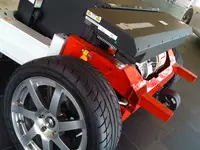
At dusk in the garage, I trace the intricate lines of a new sports segment chassis while feeling the cold metal under my fingertips.
A technician adjusts a suspension linkage while checking the torque on a central strut nut. This meticulous work highlights how vehicle segment design change is driven by the need for tighter tolerances in high-performance components.
Engineers no longer just focus on raw horsepower; they focus on how that power reaches the pavement through complex mechanical interfaces.
The modern approach to automotive structure progress involves a delicate interplay between lightweight materials and structural integrity.
As manufacturers move toward hybrid and electric architectures, the mechanical layout must accommodate heavy battery packs without compromising the agile nature of the sports segment.
This creates a new paradigm where weight distribution is managed through electronic torque vectoring rather than just physical weight placement.
I once observed a prototype chassis undergoing lateral stress tests to see how the frame reacted to high-G cornering. This hands-on experience confirms that the shift in design is about managing energy as much as managing motion.
Every component must now serve the dual purpose of providing driver feedback while maintaining the strict standards required for urban driving safety improvements.
- Identify the core chassis requirements.
- Integrate lightweight composite materials.
- Optimize structural rigidity for cornering.
Why is power efficiency in sports cars becoming a priority?
An engineer monitors a digital readout while a high-performance engine undergoes thermal testing in a controlled bay. The pursuit of power efficiency in sports cars has changed the way engineers approach the combustion cycle and hybrid integration.
It is no longer a trade-off against performance but a method to optimize the entire driving experience.

The integration of electric motors into traditional high-performance drivetrains allows for instantaneous torque delivery. This technological advancement assists in achieving better power efficiency in sports cars by filling in the gaps left by traditional turbochargers.
By using electric assistance, the mechanical system can maintain high performance without needing massive, inefficient displacements.
| Feature | Traditional Focus | Modern Focus |
|---|---|---|
| Weight | Minimization | Distribution |
| Control | Mechanical Linkage | Electronic Integration |
I believe the third step is the most critical.
How do we achieve high speed driving dynamics analysis?
A driver pushes a vehicle through a series of sweeping curves on a closed testing track. Achieving high speed driving dynamics analysis requires a perfect marriage between the aerodynamic profile and the mechanical grip.
As speeds increase, the air becomes a physical force that must be managed to prevent lift and maintain stability.
The evolution of aerodynamics has moved from simple wind-tunnel shaping to active aero systems that change based on vehicle speed. This ensures that the car remains planted during high speed driving dynamics analysis without creating excessive drag during cruising.
This ability to adapt the vehicle's physical shape to the air currents is a hallmark of recent design shifts.
What drives urban driving safety improvements in high-performance models?
A driver taps the brake pedal firmly while the electronic stability control system subtly adjusts individual wheel pressure. The necessity for urban driving safety improvements has forced sports segment designers to include advanced driver assistance systems that do not dull the driving sensation.
This is achieved through high-speed sensors that monitor the road surface and driver input.
Modern systems must reconcile the aggressive nature of a sports car with the unpredictable environment of city streets. The integration of sensors allows for more precise interventions during sudden movements, ensuring that the vehicle remains controllable.
These urban driving safety improvements ensure that high-performance vehicles can be used in diverse environments without sacrificing the core identity of the segment.
What are the limitations of current mechanical structures?

A specialized tool is used to inspect the wear on a carbon fiber component under high pressure. While the evolution of these systems is rapid, the complexity of the components introduces new maintenance requirements.
The more integrated the mechanical and electronic systems become, the more difficult it is to isolate specific failure points.
The current limitation of these advanced systems is the high level of complexity required to manage the interaction between different power sources. As we rely more on software to manage physical mechanics, the reliance on complex sensor networks becomes a critical factor.
This complexity defines the current state of the sports segment structure evolution.
The same subject is also called Performance segment mechanics.
The same subject is also called Car body evolution study.
Related




Comments 0