Volvo Nvidia autonomous drive: Challenges of future driving
The intersection of automotive engineering and advanced computing is redefining how we perceive mobility.
The Volvo Nvidia autonomous drive partnership represents a strategic fusion of hardware reliability and high-performance computing to advance self-driving capabilities. This collaboration focuses on integrating sophisticated AI with vehicle platforms to navigate complex environments.
This guide explores the technical foundations of such partnerships, the potential for vehicle innovation journey, and the practical implications for future drivers.
How can a Volvo Nvidia autonomous drive partnership work?

A technician adjusts a high-definition sensor mounted on a vehicle frame to ensure perfect alignment. The Volvo Nvidia autonomous drive partnership relies on the seamless integration of vehicle chassis engineering and powerful processing units.
High-performance computing units provide the brainpower required for real-time data processing, while the vehicle provides the physical platform and sensor suite.
Developing a successful autonomous system requires a tight feedback loop between hardware and software. The vehicle must interpret vast amounts of data from cameras, LiDAR, and radar to make split-second decisions.
By combining Volvo's safety-first engineering with Nvidia's computing prowess, the goal is to create a reliable machine learning in cars environment. This synergy allows for more accurate object detection and smoother path planning.
The future of driving together depends on how these two distinct industries merge their specialized knowledge. One provides the mobility and safety hardware, while the other provides the intelligence to drive it.
- Integrate high-performance computing hardware into the vehicle architecture.
- Develop specialized software layers for real-time data processing.
- Implement sensor fusion to synchronize environmental inputs.
What defines the journey of vehicle innovation?
At sunset, an engineer watches the headlights of a volvo flicker against the dark road during the long journey toward tomorrow. An engineer monitors a server rack as it processes massive datasets from a test fleet. The vehicle innovation journey involves moving from basic driver assistance to full autonomy through iterative software updates.
This process requires massive computational power to handle the complex algorithms that simulate human-like decision-making.
Effective autonomous systems must manage various environmental variables, such as weather, lighting, and unpredictable pedestrian movements. This requires the integration of advanced AI to recognize patterns and predict movements.
Building a robust AI vehicle necessitates testing these algorithms across thousands of edge cases to ensure safety in all conditions.
A successful transition to autonomy requires significant investment in both infrastructure and software development. As the technology matures, the focus shifts from mere obstacle avoidance to intuitive traffic interaction.
In this sequence, the second step is the most extensive.
How does machine learning in cars affect real-world driving?
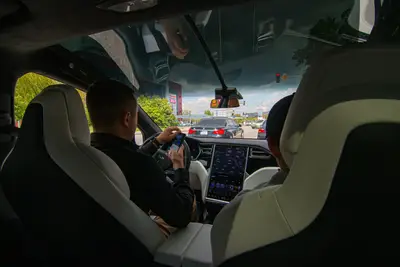
A driver watches a clean digital interface that highlights detected obstacles on a roadside screen. Integrating machine learning in cars allows vehicles to learn from vast amounts of driving data collected over time.
This data helps the system understand the nuances of different road types and driving styles.
The primary goal is to reduce human error by providing a system that is more consistent than a person. By training models on diverse datasets, the vehicle becomes better at handling rare or unexpected scenarios.
This continuous learning process is a cornerstone of developing reliable self-driving technology.
The transition to these intelligent systems involves a shift in how humans interact with their vehicles. Instead of active steering, the focus moves toward monitoring and supervising the automated processes.
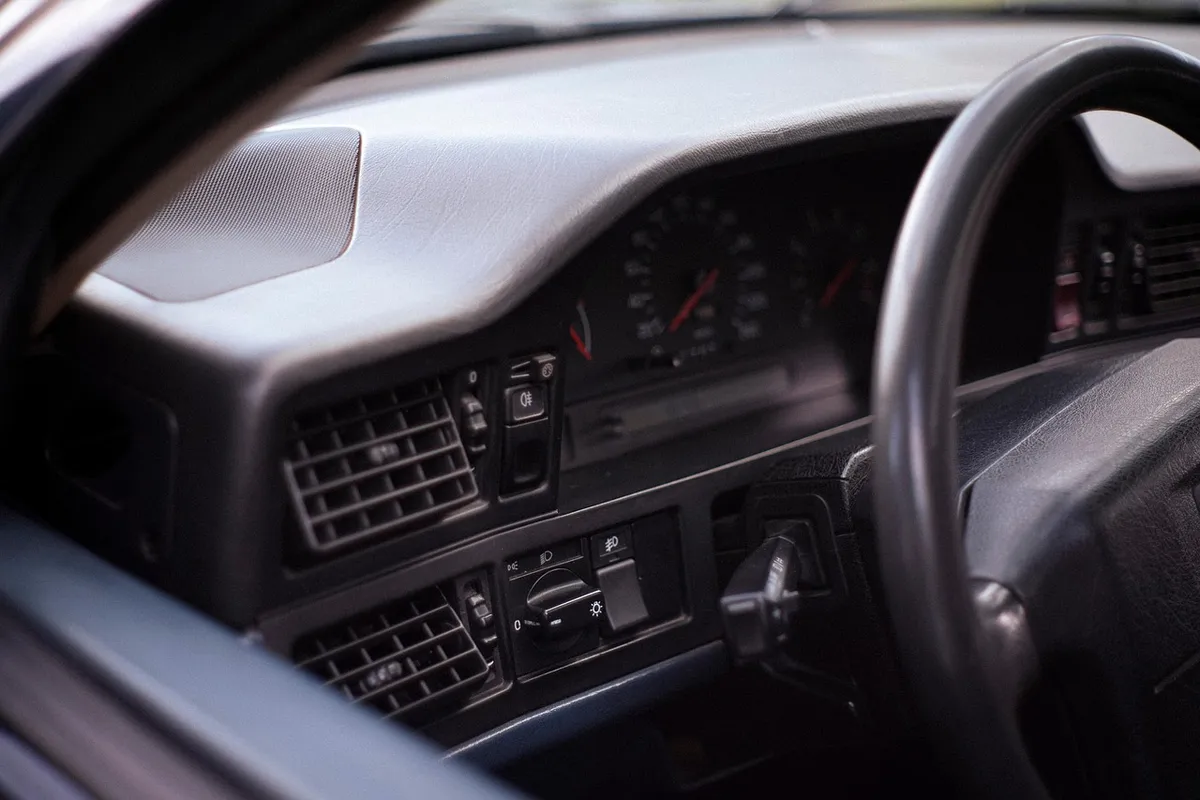
What challenges face the future of driving together? A test driver sits in a stationary vehicle, observing how the steering wheel moves on its own. The future of driving together presents significant regulatory and technical hurdles that must be overcome.
Establishing clear legal frameworks for liability in autonomous accidents remains a global challenge.
Technical limitations, such as sensor occlusion in heavy rain or snow, require more advanced hardware solutions. Computing power must also be efficient enough to run locally on the vehicle without excessive energy consumption.
Balancing high-speed processing with the vehicle's power constraints is a critical engineering task.
Ensuring cybersecurity is another vital component of the journey. As vehicles become more connected, protecting them from remote interference is paramount to passenger safety.
Is there a specific way to manage autonomous hardware?
A mechanic inspects a cooling system designed to dissipate heat from a high-powered onboard computer. Managing autonomous hardware requires a specialized approach to heat management and data throughput.
Because AI processing generates significant heat, thermal management becomes a primary design concern for the vehicle.
- Ensure the computing unit has dedicated cooling to prevent thermal throttling during peak processing. 2. Verify that all sensor connections are secure and shielded against electromagnetic interference. 3. Perform regular software calibrations to align sensor data with the physical movement of the vehicle.
I observed how a single sensor misalignment could cause the entire system to struggle with lane centering during a test run. A final check of the software-hardware handshake is essential before any road deployment.
What are the limitations of current autonomous technology?
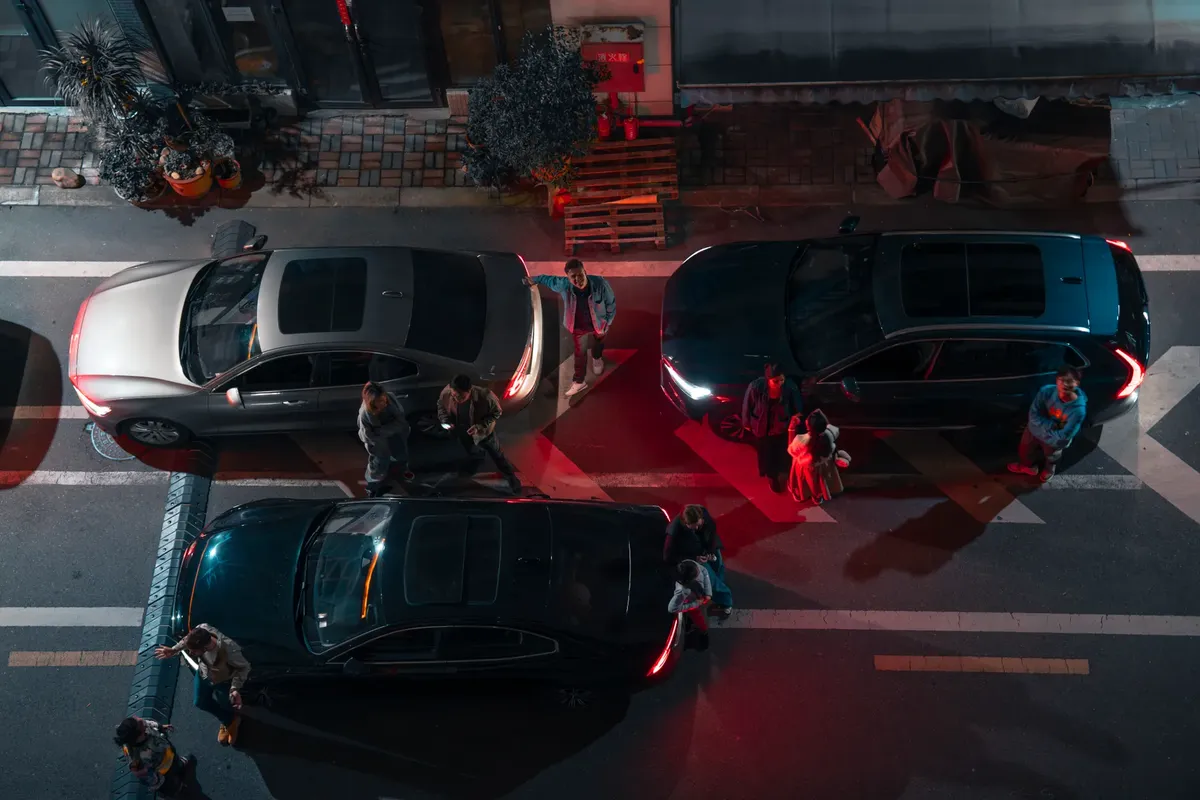
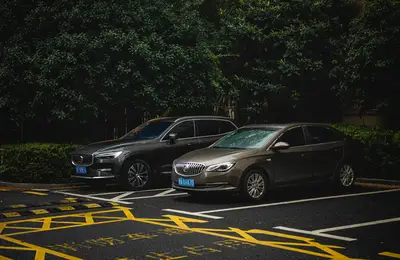
A vehicle remains parked on a suburban street, its sensors scanning the quiet environment. A concrete limitation is the ability of current systems to handle extreme, unpredictable weather conditions that obscure sensors.
While advanced, these systems still struggle when visual or laser-based data is compromised.
The reliability of the system is often tied to the quality of the input data and the clarity of the environment. If a sensor cannot "see" clearly, the entire decision-making chain is affected.
It is not established that current consumer vehicles can handle every possible edge case without human intervention.
Wikipedia: Volvo Based on the retained excerpt mentioning Nissan Alliance: AB Volvo acquired 13% of the shares in the Japanese truck manufacturer Nissan Diesel (later renamed UD Trucks) from Nissan (part of the Renault-Nissan Alliance) during 2006, becoming a major shareholder.
The same subject is also called Volvo Nvidia self driving.
The same subject is also called Autonomous tech partnership.
The same subject is also called Volvo AI vehicle.
The same subject is also called Nvidia drives Volvo.
Related

Comments 0