Norway EV market growth: Tax incentives guide adoption
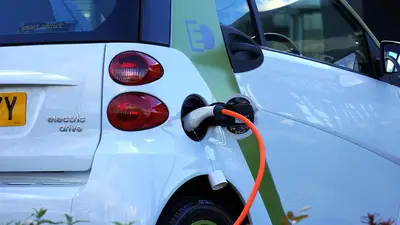
One morning in a quiet Oslo suburb, a driver plugs a cable into a sleek sedan, preparing for a commute that once required gasoline. This simple act represents a massive shift in transport.
The Norwegian EV market growth has transformed from a niche interest into a dominant force on the road. By leveraging tax exemptions and renewable energy, Norway has rapidly replaced internal combustion engines with electric alternatives.
Key takeaways: * Market share for new plug-in cars rose from 29.1% in 2016 to 88.9% in 2024. * Early tax incentives and weight deductions accelerated adoption rates. * Renewable hydropower provides a clean energy foundation for the electric fleet.
How did the Norway EV market growth begin?
A driver pulls out of a driveway in 2016, noticing how many more silent motors are passing by than in previous years. The transition began with steady, measurable growth in market presence.
In December 2016, Norway became the first country where five in every 100 passenger cars on the road were plug-in. This early momentum established a foundation for the rapid shifts seen in later years.
The Norwegian plug-in car segment market share has been the world's highest for several years, achieving 29.1% of new cars sold in 2016 and 39.2% in 2017. This trajectory continued with 49.1% in 2018 and 55.9% in 2019.
The surge became even more pronounced as the share reached 74.7% in 2020 and eventually 88.9% in 2024.
What drove the Norway plug-in EV share higher?
An official sits in a bright office during the afternoon, feeling the smooth texture of paper as they review the policies that pushed norway toward electric mobility.
A policy maker reviews budget documents, noting how specific tax adjustments influenced consumer behavior at the dealership. These financial levers made electric vehicles highly competitive.
The transition was heavily influenced by non-monetary incentives and tax structures. All-electric cars and vans are exempt from all non-recurring vehicle fees, including purchase taxes, and 25% VAT on purchase, making electric car purchase price competitive with conventional cars.

Weight deductions also played a role in the early years. Beginning on 1 July 2013, the existing weight deduction for conventional hybrids and plug-in hybrids of 10% was increased to 15% for PHEVs. This was later increased to 26% effective since January 2015.
Additionally, in September 2013, the Norwegian Parliament approved an exemption from the 25% VAT for leasing electric vehicles effective from 1 January 2014.
How did the Norway EV vs ICE trends manifest in emissions?
A technician monitors a carbon emission sensor, seeing the numbers drop as more electric cars enter the local fleet. The shift in the vehicle mix directly impacted environmental targets.
The rapid adoption of electric vehicles allowed the country to meet environmental goals ahead of schedule.
In 2017, as a result of its fast growing EV adoption, Norway was able to achieve its climate target for average fleet CO2 emissions (85 g/km) for new passenger cars three years earlier than pledged.
The clean nature of the fleet is supported by the energy source. The fleet of electric cars is one of the cleanest in the world since about 98% of the electricity generated in the country comes from renewable energy sources, mainly hydropower.
What does the Norway EV market analysis reveal about recent years?
A consumer stands in a showroom, comparing a high-tech battery vehicle to a traditional gasoline model. The dominance of electric power is now clearly visible in the sales data.

The shift toward pure electric models has become the primary trend in the recent market. In January 2024, the share of combined EV was 93.9%: 92.1% full electrics (BEVs), and 1.8% plugin hybrids (PHEVs).
The growth was not without its stages. The plug-in hybrid market share rose to 5.2%, up from just over 1% in 2014, and from 4.2% in September 2015 to 13.9% in September 2016. This indicates how the market moved from hybrid dominance toward full battery electric dominance.
What were the Norway electric car growth milestones?
A researcher looks at a timeline of vehicle registrations, marking the years when milestones were reached. Each leap in percentage reflects a changing social norm.
In October 2018, the market hit 10% of all passenger cars on the road, and by September 2022, it reached 25%. These milestones represent the normalization of electric transport.
The ability to scale was influenced by early targets. According to the Norwegian Electric Vehicle Association, if the country wants to reach the ambitious climate goals set by the Parliament, the next goal is to have 400,000 battery electric vehicles by 2020.
How did the Norway EV market share shift affect the total fleet?
A driver looks in the rearview mirror at a highway filled with silent, electric-powered vehicles. The cumulative effect of these changes is visible in the total number of cars on the road.
The shift is not just in new sales but in the growing presence of electric vehicles within the total fleet. The milestone of 100,000 light-duty battery electric vehicles was achieved in December 2016, representing about 10% of all pure electric cars that have been sold worldwide.
One limitation of these findings is that the data provided focuses on specific market share percentages and historical milestones rather than the total number of all vehicles currently on the road.
- How did the Norway EV market growth begin?
- What drove the Norway plug-in EV share higher?
- How did the Norway EV vs ICE trends manifest in emissions?
The subject here is Norway EV market growth.
This part also covers Norway ICE sales decline.
Related






Comments 0