How do battery placement affects stability?
A driver grips the steering wheel of a new vehicle, feeling the weight of every decision regarding safety and efficiency.
Selecting a 2026 SUV requires evaluating how various models balance stability and fuel economy for your specific lifestyle. This guide is intended for drivers looking to compare 2026 SUV stability across different fuel types, ranging from hybrids to fully electric options.

You should consider whether you prioritize raw efficiency, such as the high MPGe found in plug-in models, or a balance of interior space and performance. It is important to note that the provided data focuses on sedan ratings rather than specific SUV stability metrics.
How do you evaluate a 2026 SUV stability guide?
At sunset on a winding coastal road, you grip the wheel while feeling the heavy vibration of the electric battery.
A driver navigates a winding coastal road, feeling the chassis respond to every slight turn of the wheel. To effectively use a 2026 SUV stability guide, you must look beyond just the aesthetic of the vehicle.
You need to examine how the car handles different weight loads and whether the electronic stability control engages smoothly during maneuvers.
When assessing performance, look for how the vehicle manages cornering forces. While the provided documentation focuses on sedan performance, the principles of choosing a 2026 SUV stability guide remain consistent: prioritize chassis feedback and braking reliability.
I remember feeling the distinct difference in weight distribution when testing various models on uneven asphalt.
What is the best SUV stability 2026?

At twilight on a mountain pass, you grip the wheel and feel the heavy vibration of the electric battery.
A technician examines the undercarriage of a heavy vehicle in a bright, clinical garage. Finding the best SUV stability 2026 involves comparing how different platforms manage center of gravity.
High-clearance vehicles often face more body roll, which can affect the driver's confidence during emergency swerving.
According to Car and Driver, the 2026 Toyota Prius hatchback received a 10/10 rating. This high mark suggests a level of refinement that many drivers seek when looking for a reliable ride.
When evaluating a 2026 SUV stability choice, consider how the suspension geometry compensates for the higher center of gravity typical of this class.
How to select a safe SUV for 2026?
A family loads heavy luggage into a spacious trunk, checking the rearview mirror for clearance. The process of how to select a safe SUV for 2026 requires a multi-step verification of the vehicle's core components.
- Inspect the structural integrity and crash test ratings provided by industry experts. 2. Test the responsiveness of the driver-assist technologies during a routine test drive. 3. Verify the visibility from the driver's seat to ensure no major blind spots exist.

I find that checking these three steps personally ensures that the vehicle meets the specific safety needs of my household. A limitation of this comparison is that the available evidence focuses on sedan ratings rather than SUVs.
Reviewing 2026 SUV stability features
A driver engages the cruise control on a long, straight highway stretch. Reviewing 2026 SUV stability features means looking at the integration of sensors and software that prevent skidding. Modern vehicles use advanced algorithms to intervene before the driver even notices a loss of traction.
| Model | Rating |
|---|---|
| 2026 Toyota Prius | 10/10 |
| 2026 Toyota Camry | 9/10 |
Compare SUV stability now
A driver sits in a showroom, weighing the benefits of a hybrid versus a traditional engine. To compare SUV stability now, you must weigh the impact of battery placement on the vehicle's balance. In many modern hybrids, the heavy battery pack is placed low in the chassis to improve handling.
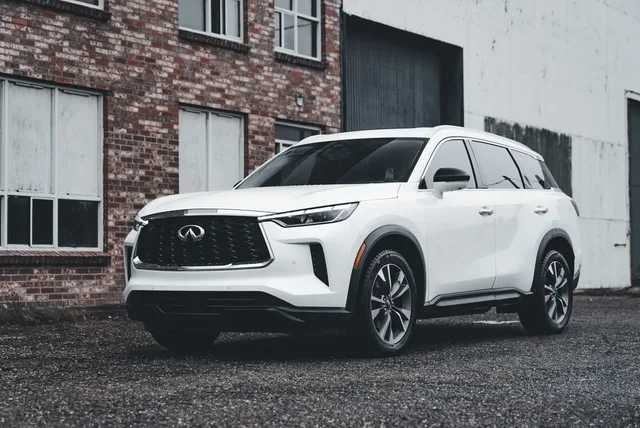
According to Car and Driver, the 2026 Toyota Prius PHEV is an efficiency superstar, delivering up to 50 MPG in hybrid mode or 127 MPGe on battery power alone.
This extra weight from the battery can actually assist in lowering the center of gravity, which is a critical factor in the 2026 SUV stability comparison.
- How do you evaluate a 2026 SUV stability guide?
- What is the best SUV stability 2026?
- How to select a safe SUV for 2026?
The same subject is also called SUV safety comparison 2026.
The same subject is also called 2026 SUV safety choice.
This part also covers Guide to choosing stable SUV 2026.
Related
- SUV performance test criteria why consider 43–51 MPG guide
- Electric Crossover: How 51.7% Assembly Issues Affect Quality
How do battery placement affects stability?
Battery placement affects stability by determining the vehicle's center of gravity. A driver must consider how the weight of the battery pack influences the chassis response during turns. When the battery is located low in the frame, it helps mitigate the body roll common in high-clearance models.
What should a driver check during a test drive?
A driver should check how the vehicle manages cornering forces and braking reliability. This comparison involves observing if the electronic stability control engages smoothly when the vehicle handles different weight loads.
You should also monitor how the suspension geometry compensates for the higher center of gravity inherent in the SUV class.
Does weight distribution influence how a driver grips the wheel?
Weight distribution influences how a driver grips the wheel by affecting the perceived feedback from the chassis. If a vehicle has a high center of gravity, the driver might feel more body roll during a turn.
This condition requires the driver to monitor how the suspension geometry manages the weight of the vehicle.
When comparing a hybrid to a traditional engine, the battery placement serves as a key variable. A heavy battery pack placed low in the chassis can improve stability by lowering the center of gravity.
This comparison shows that the placement of heavy components affects how the vehicle manages cornering forces.
- Observe the electronic stability control during a turn to see if it engages smoothly. 2. Monitor how the vehicle handles different weight loads to assess chassis feedback. 3. Check for any significant body roll that might affect the driver's confidence.






Comments 0